Introduction to surgery
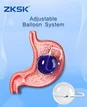
Experimental studies have found that there is an acute inflammatory reaction within 1 to 4 days after skin band ligation. In 3 to 7 days, the local area changes from necrosis to scab peeling, leaving superficial ulcers. Histological studies show submucosal inflammation and scar formation, and submucosal varicose. The veins disappear. Clinical studies have shown that after esophageal variceal ligation, superficial ulcers occurred at the treated sites. A follow-up gastroscopy 14 to 21 days later showed that the ulcers healed and the varicose veins disappeared. Serious complications such as bleeding and perforation rarely occur.

What's Precautions?
Pay attention to complications and their prevention and treatment.
1. Bleeding Incomplete suction or failure to bandage after suction is the main cause of bleeding, and the vein should be bandaged again.
2. Dysphagia Dysphagia caused by EVL is usually transient, lasting no more than 24 hours, and does not require special treatment.
3. The application of outer cannula may cause bleeding or esophageal perforation, which should be taken seriously.
The rebleeding rate after endoscopic esophageal variceal ligation is about 14%, and there are generally no obvious complications. Its long-term efficacy and safety remain to be further observed.
What's the Indications?
Endoscopic esophageal variceal ligation is suitable for:
1. Those with esophageal varices and/or gastric varices bleeding or ineffective medication to stop bleeding;
2. Those with repeated bleeding from esophageal varices, poor general condition, and unable to tolerate surgical treatment;
3. Elective prevention
What's the Contraindications?
Those with severe heart, lung, brain, and kidney dysfunction, severe bleeding, uncorrected hemorrhagic shock, or extremely poor general condition that cannot cooperate and tolerate.
Prepare
1.Instrument preparation
(1) Endoscope: Use forward-looking fiber or electronic endoscope, and the clamp channel should be greater than or equal to 2.8mm.
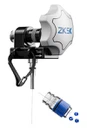
(2) ligation device: ZKSK multi-band ligation device.
Installation of ZKSK Multi-band ligator:
(3) Endoscope outer tube and special large mouth pad.
2. Patient preparation
(1) Same as preparation before gastroscopy.
(2) Intramuscular injection of 10 mg of diazepam and 10 mg of 654-2 or 20 mg of Jieshuling 10 minutes before surgery.
(3) First perform routine gastroscopy to understand the condition of the esophagus, stomach, and duodenum to avoid reducing the visual field after installing a ligation device and affecting observation.
Method
1. The method of indwelling the endoscopic outer tube is the same as the indwelling ST-EI tube for esophageal variceal sclerotherapy (EIS). Since the domestic ligation device can only install one ligation ring at a time, the indwelling outer tube of the endoscope avoids damage to the pharynx caused by repeated entry and exit of the endoscope.
2. Install the ligation device on the front end of the endoscope (see Instrument Preparation).
3. After ligating the varicose veins, install the ligating device, insert the endoscope to search for lesions, determine the ligation site and sequence, align the outer cover with the ligation site, continue negative pressure suction to suck the tissue into the outer cover cavity, pull the operating steel wire and the rubber band will fall off The ligated vein is tied at the base of the lesion. At this time, the ligated vein can be seen to be purple polyp-like. Repeat the ligation at multiple locations.