


Medical Grasping Forceps
The introduction of medical grasping forceps in recent years has improved surgical hemostasis techniques. They are employed to clamp blocked blood arteries and momentarily stop blood flow. To stop bleeding in deep small and medium blood arteries, they have been utilized extensively. In 1975, Hayashi and his associates developed the first "hemostasis clip," which was employed in gastrointestinal endoscopy. By the 1990s, it had gained recognition as a useful tool for hemostatic applications. medical grasping forceps have numerous uses due to their ongoing evolution.
Specifications
|
Code |
Working length (cm) |
Clip opening (mm) |
Sheath O.D. (mm) |
|
HC-10-195/26P |
195+10cm |
10±2mm |
2.5±0.5mm |
|
HC-14-195/26P |
195±10cm |
14±2mm |
2.5±0.5mm |
|
HC-10-165/26 |
165±10cm |
10±2mm |
2.5±0.5mm |
|
HC-10-195/26 |
195±10cm |
10±2mm |
2.5±0.5mm |
Features
The front end is precisely crafted to allow for seamless clamp removal and optimum clamp passage under the endoscope.
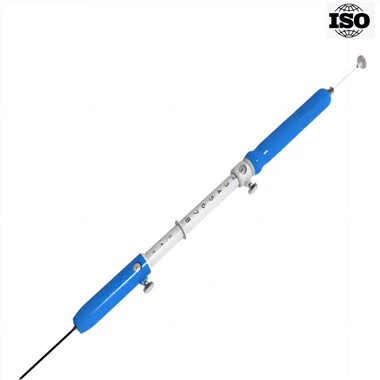
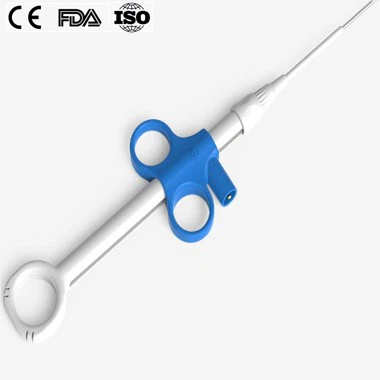
Themedical grasping forceps comprises of a single-use clip component and a flexible delivery device part, with the clip already fitted on the front end of the flexible releaser.
It must be used in conjunction with gastrointestinal endoscopes with biopsy forceps channel sizes more than or equal to 2.8mm, such as gastroscopes and colonoscopes.
It can be opened and closed numerous times, realizing the purpose of repetitive pre-clamping.
A variety of span alternatives that are appropriate for different types of wounds and bleeding locations.
Medical professionals can grip tissue at the ideal angle thanks to a rotatable feature.
Intended Use
The gadget, which is endoscope compatible, is intended to be clipped into the digestive tract in order to treat minor artery bleeding and pulsation mechanically.
Features of Medical Grasping Forceps
Design of rotatable clips allows for exact placement.
Clips that open and close repeatedly.
Innovative handle lock system and atraumatic tip design prevent scope damage following clip release.
Easy to release the clips thanks to a sensitive release system.

Five patients, all of whom had active bleeding at the time of their first presentations, had recurrent bleeding. In 4 cases, medical grasping forceps
Was used to successfully stop rebleeding, and one patient had surgery. The retention of the clips seemed to be good; just 1 patient experienced rebleeding after an early clip dislodgement. There were no side effects from this therapy. Peptic ulcer healing was not hampered by clips. We come to the conclusion that the installation of endoscopic hemoclips is a highly efficient and secure strategy for managing nonvariceal gastrointestinal bleeding and merits comparison studies with other endoscopic hemostasis techniques.
Hot Tags: medical grasping forceps, China medical grasping forceps manufacturers, suppliers, Oval Cup Biopsy Forceps, Alligator Cup Biopsy Forceps, Medical Grasping Forceps, Disposable Biopsy Forceps, Endoscopy Gastroenterology Accessories, 13mm Disposable Endoscopic Hemostasis Clip
Previous
No InformationYou Might Also Like


Send Inquiry