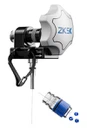
The genesis of band ligation procedures can be traced back to the late 1980s. The earliest report of esophageal varices treated endoscopically with a single-band ligator dates back to 1986, when Van Stiegmann et al. first described the use of ligation technology in the management of gastrointestinal diseases. But because the single-band gadget required frequent band replacements, the process was laborious and ineffective.
When Stiegmann and Goff presented the multi-band ligator in 1988, it marked a paradigm change. This unique tool made it possible to load several rubber loops at once, greatly increasing the effectiveness of the treatment. Multi-band ligators were widely used in clinical practice up until the 1990s, when they quickly emerged as the method of choice for endoscopic treatment of esophageal varices.
The design of ligators saw constant improvement in the first decade of the twenty-first century. Variants that were disposable and reusable were created to meet a range of therapeutic requirements. Advances in materials science and minimally invasive procedures have led to additional improvements in safety and performance in recent years.
Let's see more of it. First of all, we might ask what kind of applications in gastrointestinal disease management of the multi-band ligator?
1. Esophageal Varices is the primary indication. In cases of acute variceal bleeding, band ligation provides rapid hemostasis and reduces the risk of rebleeding. For prophylactic treatment, periodic ligation significantly lowers the risk of initial or recurrent bleeding episodes.
2. Compared to traditional surgical approaches, endoscopic band ligation for internal hemorrhoids offers the advantages of minimal invasiveness and rapid recovery. It is particularly suitable for grade I-III internal hemorrhoids.
3. Despite the technical challenges, multi-band ligators have demonstrated efficacy in managing gastric fundal varices, especially in patients unsuitable for transjugular intrahepatic portosystemic shunt (TIPS) procedures.
4. For certain vascular anomalies in the small intestine and colon that are refractory to other treatment modalities, multi-band ligation presents a novel therapeutic option.
Secondly, to compare with other deseas managements, what advantages does it have?
1. The ability to load multiple bands (typically 6-10) simultaneously reduces the frequency of device exchanges, thereby enhancing procedural efficiency.
2. Compared to sclerotherapy, band ligation is associated with a lower incidence of complications, which means safer. The most common adverse events are transient retrosternal pain and dysphagia, which typically resolve spontaneously.
3. Multi-band ligators are designed with ergonomics in mind, featuring intuitive operation and a relatively short learning curve.
4. The ligation procedure can be performed multiple times as needed, making it suitable for long-term follow-up treatment.
5. While the initial investment may be higher, the long-term cost-benefit ratio is favorable when considering factors such as reduced rebleeding rates and shortened hospital stays.

Thirdly, is there any Clinical Significance?
1. For patients with esophageal varices, band ligation has significantly reduced bleeding-related mortality. A meta-analysis demonstrated that compared to sclerotherapy, band ligation can decrease mortality rates by approximately 25%.
2. For patients with recurrent bleeding, band ligation effectively controls symptoms, reduces hospitalization frequency, and markedly improves quality of life.
3. As an endoscopic procedure, band ligation avoids the trauma associated with open surgery, minimizes complications, and accelerates patient recovery.
4. Multi-band ligators offer new therapeutic options for lesions that are challenging to manage with conventional methods, such as small intestinal vascular malformations.
Last but not the least, How should we look forward to multi-band Ligator's future development
1. Intelligent Systems: Integration of artificial intelligence for smart recognition and automated ligation, enhancing precision and safety.
2. Material Innovations: Development of biodegradable ligation bands to reduce foreign body reactions and minimize long-term complications.
3. Multifunctional Integration: Creation of endoscopic devices that combine ligation, injection, and hemostasis capabilities, increasing therapeutic versatility.
4. Miniaturization: Further reduction in ligator size to enable application with smaller-caliber endoscopes, expanding the range of treatable conditions.
5. Personalized Treatment: Customization of ligation protocols based on individual patient characteristics to optimize therapeutic outcomes.