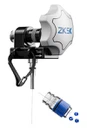
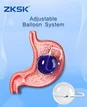
With the evolving field of minimally invasive endoscopic interventions, multi-band ligators (MBL) have become indispensable tools in the treatment of esophageal varices and internal hemorrhoids. These devices allow clinicians to rapidly and effectively deploy multiple rubber bands in a single session, enhancing procedural efficiency while minimizing patient risk and discomfort.
Article content
Esophageal Variceal Ligation: Controlling Life-Threatening Bleeding
Esophageal varices are dilated submucosal veins in the lower esophagus, often resulting from portal hypertension in cirrhotic patients. Their rupture can lead to acute, life-threatening hemorrhage.
Endoscopic Variceal Ligation (EVL) is now the gold-standard therapy for both emergency bleeding control and primary or secondary prophylaxis. Multi-band ligators allow for the sequential placement of elastic bands around varices, leading to thrombosis, necrosis, and eventual sloughing.
Key benefits of multi-band ligation in EVL include:
1. Rapid band deployment without reloading the endoscope
2. Fewer complications compared to sclerotherapy
3. Reduced procedure time and sedation needs
A typical ligator is mounted on the endoscope tip and preloaded with 4–10 rubber bands. During endoscopy, the varix is suctioned into the ligator chamber, and a band is deployed. Sessions are often repeated every 2–4 weeks until eradication.
Rubber Band Ligation in Hemorrhoid Therapy
In the management of Grade I–III internal hemorrhoids, rubber band ligation is a proven, outpatient-friendly option. The procedure involves placing an elastic band around the base of the hemorrhoid, cutting off its blood supply, which leads to necrosis and natural detachment within days.
Advantages of hemorrhoidal banding:
1. Performed without anesthesia
2. Minimal recovery time
3. High success rate in outpatient settings
Multi-band ligators improve workflow by allowing clinicians to treat multiple hemorrhoids in a single sitting-important in high-volume clinical environments.
Standard Multi-Band Ligators: Reliable and Efficient
The classic multi-band ligator is designed for speed, reliability, and versatility. Preloaded with multiple elastic bands, it provides tactile control for experienced endoscopists.
Common features include:
Universal endoscope compatibility
Ergonomic trigger handles
Barrel systems preloaded with 4–10 bands
Latex or latex-free band options
These systems are ideal for high-throughput hospital or clinic use, where consistency and familiarity are valued.
Click-Feedback Multi-Band Ligators: Precision You Can Hear
A newer generation of multi-band ligators integrates auditory click feedback-a distinct "click" sound that occurs upon each successful band deployment.
Article content
Benefits of Click-Feedback Models:
Auditory confirmation enhances user confidence
Improved safety by reducing incomplete band release
Training-friendly: ideal for newer endoscopists
Some models also include visual cues (e.g. a colored ring before the last band)
Used in both EVL and hemorrhoid banding procedures
These features are especially useful in teaching hospitals and for procedures performed in high-pressure or noisy environments where tactile feedback alone may be insufficient.
Beyond Varices and Hemorrhoids: Expanded Indications
Multi-band ligation technology is also being explored in:
Gastric varices (especially GOV1)
Bleeding arteriovenous malformations (AVMs)
Post-polypectomy bleeding
Mallory-Weiss tears
These applications highlight the versatility of the technology in managing GI bleeding beyond conventional indications.