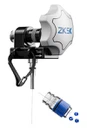
At the heart of the endoloop is its core structure, typically made of biocompatible and non-absorbable materials like nylon or polypropylene. This loop serves as the foundation for the device's functionality, allowing surgeons to create a secure closure around tissues, vessels, or lesions. Complementing the loop is the ergonomic handle, which provides surgeons with the control and manipulation needed during procedures. Additionally, some endoloops come equipped with a protective sheath, ensuring safe passage through anatomical structures and minimizing the risk of premature deployment.
Applications Across Specialties:
The versatility of endoloops extends across a wide spectrum of surgical specialties, including gastrointestinal, urological, gynecological, and more. One of the most common applications is in endoscopic polypectomy procedures, where endoloops are used to ligate and remove polyps with long or thick pedicles. By creating a loop around the polyp's base and tightening it, surgeons can interrupt the blood supply to the polyp, facilitating safe excision.
In addition to polypectomy, endoloops find widespread use in hemostasis, particularly in cases of bleeding from vascular lesions or after tissue resection. The ability to precisely ligate bleeding vessels or tissues makes endoloops invaluable in ensuring hemostasis and preventing postoperative complications.
Furthermore, endoloops are utilized in surgeries requiring tissue ligation, such as appendectomy or tubal ligation, providing a reliable method for securely closing off tissues or structures. Their application also extends to the closure of fistulas, where endoloops can be used to close off fistulous tracts or create controlled fistulae by ligating the connecting tissues.
Advantages and Considerations:
The advantages of endoloops are manifold. Their versatility allows for their use in various surgical procedures, offering precise ligation and closure of targeted structures. Moreover, endoloops are often employed in minimally invasive procedures, reducing surgical trauma and accelerating recovery times for patients. Additionally, homemade or low-cost endoloop alternatives provide cost-effective solutions, particularly in resource-limited settings.
However, it is essential to recognize the considerations associated with endoloop use. Proper training and skill are necessary for the safe and effective deployment of endoloops, as improper technique can lead to complications such as tissue ischemia or necrosis. Surgeons must also be mindful of size limitations, as endoloops may not be suitable for larger structures or vessels. Furthermore, like any surgical device, there is a risk of complications such as bleeding, infection, or tissue damage, which must be carefully considered and managed.