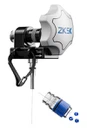
Background on Pulse Lavage
With a finding made by Liedberg and his associates in the 1950s, the first indications of Pulse Lavage were detected. They demonstrated that when bacterial concentrations of streptococci, pseudomonas, or staphylococci were greater than 100,000 organisms per gram in tissues, skin grafts in rabbits were destroyed.
Robson and Heggers discovered in 1969 that wound healing is only possible when the bacterial population is kept at a concentration of 100,000 or fewer organisms per gram. Constantine and Bolton discovered that the wound could not constrict and close if there was necrotic tissue or eschar present in the wound or around the margin of the wound.
Modern technological equipment is used to perform pressure wound washing treatments in a very hygienic manner, and this use is still evolving.
Factors to Take into Account When Using Pulse Lavage-lavado de pulso
• Because the pressure force utilized when utilizing Pulse Lavage is adjustable, it should be adjusted based on the patient's tolerance and the quantity of debris or necrotic tissues that need to be debrided. Depending on the model, the pressure force setting might be anywhere from 4 and 12 pounds. The pressure needs to be raised in order to increase debridement.
• Pulse Lavage/lavado de pulso can be used in a variety of patient contexts, including long-term care institutions, outpatient physical therapy settings, acute care hospital beds, and more because to its low cost and simple mobility.
• In order to prevent Pulse Lavage from hindering the healing of wounds, the normal saline solution bag should be warmed to room temperature. As a result, this effect is reduced.