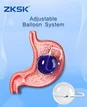
As an advanced medical device, the ligation device is widely used in the medical field, especially in endoscopic surgery, varicose vein treatment, hemorrhoid treatment, etc. It uses physical compression or thermal energy principles to accurately ligate the target tissue to achieve the purpose of hemostasis, occlusion of blood vessels or removal of diseased tissue. The design of the ligation device is to reduce surgical trauma, speed up patient recovery, and improve treatment effects.

Endoscopic esophageal variceal ligation
Working principle: The working principle of the ligation device is mainly divided into two categories: mechanical compression type and thermal energy type. The mechanical compression type ligation device tightly ligates the target tissue through an elastic ring or rubber loop, blocking blood circulation, causing the tissue to gradually shrink and fall off. The thermal energy type ligation device uses energy sources such as high-frequency current or laser to denature and coagulate the protein in the target tissue in a very short time to achieve the same therapeutic effect.

ZKSK rubber loop(6 bands)
Type: According to different application scenarios and designs, the ligation device can be divided into internal hemorrhoid ligation devices, varicose vein ligation devices, endoscopic tissue ligation devices, etc. Each type has its specific application scenarios and operation requirements. Scope of application and advantages
Scope of application: The ligation device is widely used in the treatment of hemorrhoids (especially internal hemorrhoids), minimally invasive treatment of varicose veins, hemostasis after resection of gastrointestinal polyps, and auxiliary treatment of certain tumor tissues.

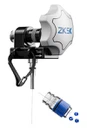
ZKSK ligator's handle
For varicose veins, the patient needs to gradually and slowly swallow lidocaine gel and other surface anesthetics under the guidance of a doctor. Then the doctor will place a gastroscope and look for varicose veins with active bleeding in the patient under the scope. When the bleeding point is found, the bleeding vein is grasped with a grasper, and then the rubber band-like ligation ring is released to ligate the bleeding vein, thereby playing a role in hemostasis.
At present, the commonly used ligation devices in clinical practice are mostly multi-ring models. That is, by placing a gastroscope once, six to nine bleeding sites can be ligated, which greatly reduces the pain of repeated placement of gastroscopes for patients, and also improves the efficiency of the operation.

ZKSK multi-band ligator(4 bands -9 bands)